
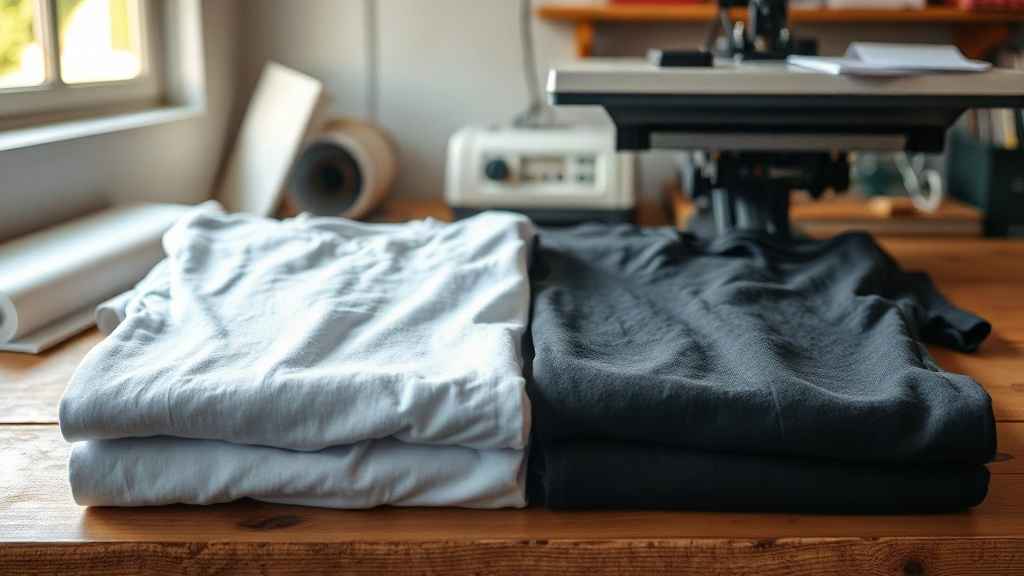
Walk into any print shop that runs dtf transfers daily and you will hear the same argument twice a week: which blank actually holds a transfer best without ghosting, cracking, or that plastic sheen that customers complain about after three washes? Two names come up constantly in that conversation, smart blanks and shaka wear, and most people pick one based on price alone before they have pressed a single shirt. That is a mistake worth unpacking.
I have run both through the same press, same film, same powder, same cure schedule, and the differences show up fast once you stop looking at the spec sheet and start looking at the finished garment after a week of real wear.
Why Blank Choice Matters More With DTF Than Other Methods
Screen printing lays ink into the fabric weave. Vinyl sits on top. DTF sits on top too, but it does so with a thermoplastic adhesive layer that has to bond to whatever surface you give it. If that surface is inconsistent, the transfer is inconsistent. Cotton, polyester, and blends all absorb and reflect heat differently, and a blank that feels identical to another at the wholesale catalog level can behave completely differently under a 320-degree platen.
This is why the blank is not just a canvas. It is half the chemistry of the job.
Heat Absorption and Fabric Blend
Higher polyester content means the fabric wants to absorb heat quickly and hold it, which can be great for adhesion but risky for scorching. Higher cotton content is more forgiving on temperature but can leave you fighting texture if the weave is rough. Shaka wear tends to lean into heavier, streetwear-oriented cotton and cotton-blend constructions, which means the transfer sits on a denser surface. That density is a gift for opacity and a headache for anyone who rushes the press time.
Surface Texture and Hand Feel
Run your hand across a finished DTF print on a smooth, tightly knit blank and you get a clean, almost painted feel. Run it across a rougher, heavier knit and you can feel the film riding over the texture. Neither is wrong, but they serve different customers. If you are printing for a brand that sells heavyweight tees as a premium product, texture is part of the appeal. If you are printing for a team or event where the shirt is a utility item, smooth and flat wins.
Smart Blanks: Where They Fit Best
Smart blanks have carved out a reputation among print shops that want predictable, budget-conscious garments without the lottery of inconsistent sizing or wildly variable fabric weight between colors. In practice, that predictability is worth more than a few cents per unit when you are running a few hundred pieces and cannot afford to re-press half of them.
A few things stand out when you actually work with them:
- Consistent sizing across colorways, which matters more than most people admit when you are printing a multi-color order
- Fabric weight that sits in a comfortable middle ground, not so light that transfers telegraph through, not so heavy that cure times balloon
- Colorfastness that holds up when you are pressing at the higher end of the DTF temperature range
The tradeoff is character. These are workhorse blanks, not statement pieces. If your customer is buying the shirt because of the shirt, that is a different conversation.
Pressing Notes for Smart Blanks
Pre-press for three to five seconds to drive out moisture. Moisture is the number one cause of a transfer that looks perfect off the press and peels at the corner two days later. Medium pressure, 320 to 330 degrees, and a full ten to twelve seconds of press time with the film still hot is a reliable starting point. Peel cold or warm depending on your film manufacturer, but test both on a scrap piece before you commit to a full run.
Shaka Wear: Heavier Fabric, Different Rules
Shaka wear built its name on heavyweight, boxy cuts that appeal to streetwear and skate-adjacent audiences. That weight is not just marketing. A heavier fabric behaves differently under heat, and it changes how you should approach dtf transfers if you want a result that lasts.
The density means heat has to travel further to reach the adhesive layer evenly. Press too fast and you get a transfer that bonds on the surface but never fully anchors, which is exactly the failure mode that shows up as edge lifting after a few washes. Press too long and you risk scorching on darker or more heat-sensitive colorways.
Pressing Notes for Shaka Wear
Extend your press time rather than cranking temperature. Twelve to fifteen seconds at 320 degrees with firm pressure tends to work better than fourteen seconds at 340. Pre-press longer too, since heavier fabric holds more ambient moisture. And if you are working with a blend that leans toward polyester, watch for dye migration on lighter films, especially on darker garment colors.
Comparing the Two for Real Print Runs
Here is the honest breakdown based on what actually matters in production:
- Budget and volume: smart blanks usually win when you are pushing high unit counts and need margin to survive.
- Premium feel: shaka wear wins when the garment itself is part of what the customer is paying for.
- Ease of pressing: Smart blanks are more forgiving for newer operators still dialing in their DTF workflow.
- Durability of print on heavy fabric: Shaka Wear holds up well once you get the cure right, but the margin for error is thinner.
Neither blank is objectively better. The question is which one matches the product you are actually selling.
A Quick Test Worth Doing Before Any Large Order
Press one shirt from each blank, wash it three times, and inspect the edges under good light. That single test will tell you more than any spec sheet or forum thread. Every press behaves a little differently, and the only data that matters is what comes out of your own shop.
Frequently Asked Questions
Do DTF transfers work on 100% polyester Shaka Wear blanks?
Yes, but temperature control becomes critical. Polyester can scorch and can also cause dye migration into lighter transfer films. Lower your temperature slightly, extend press time, and test on a scrap before running a full order.
Is Smart Blanks a good choice for beginners learning DTF?
It is one of the more forgiving options because the fabric weight and consistency reduce variables. You are less likely to fight uneven heat distribution or sizing surprises, which lets you focus on learning press technique.
How long should I pre-press before applying a DTF transfer?
Three to five seconds for standard cotton blends. Heavier fabrics like Shaka Wear benefit from a slightly longer pre-press, closer to six or seven seconds, to drive out moisture that would otherwise interfere with adhesion.
Why does my DTF transfer peel after washing even though it looked fine off the press?
The most common causes are insufficient pressure, too short a press time, or moisture trapped in the fabric before pressing. Check all three before assuming the film or powder is the problem.
Can I mix Smart Blanks and Shaka Wear in the same order?
You can, but you should not press them on the same settings without checking results on both. Different fabric weights absorb heat differently, so a setting that works perfectly on one may under-cure or scorch the other.